
The foundation behind HABILIS Brain 0
Our robot foundation model architecture brings together visual reasoning, continuous action, and recovery during execution.
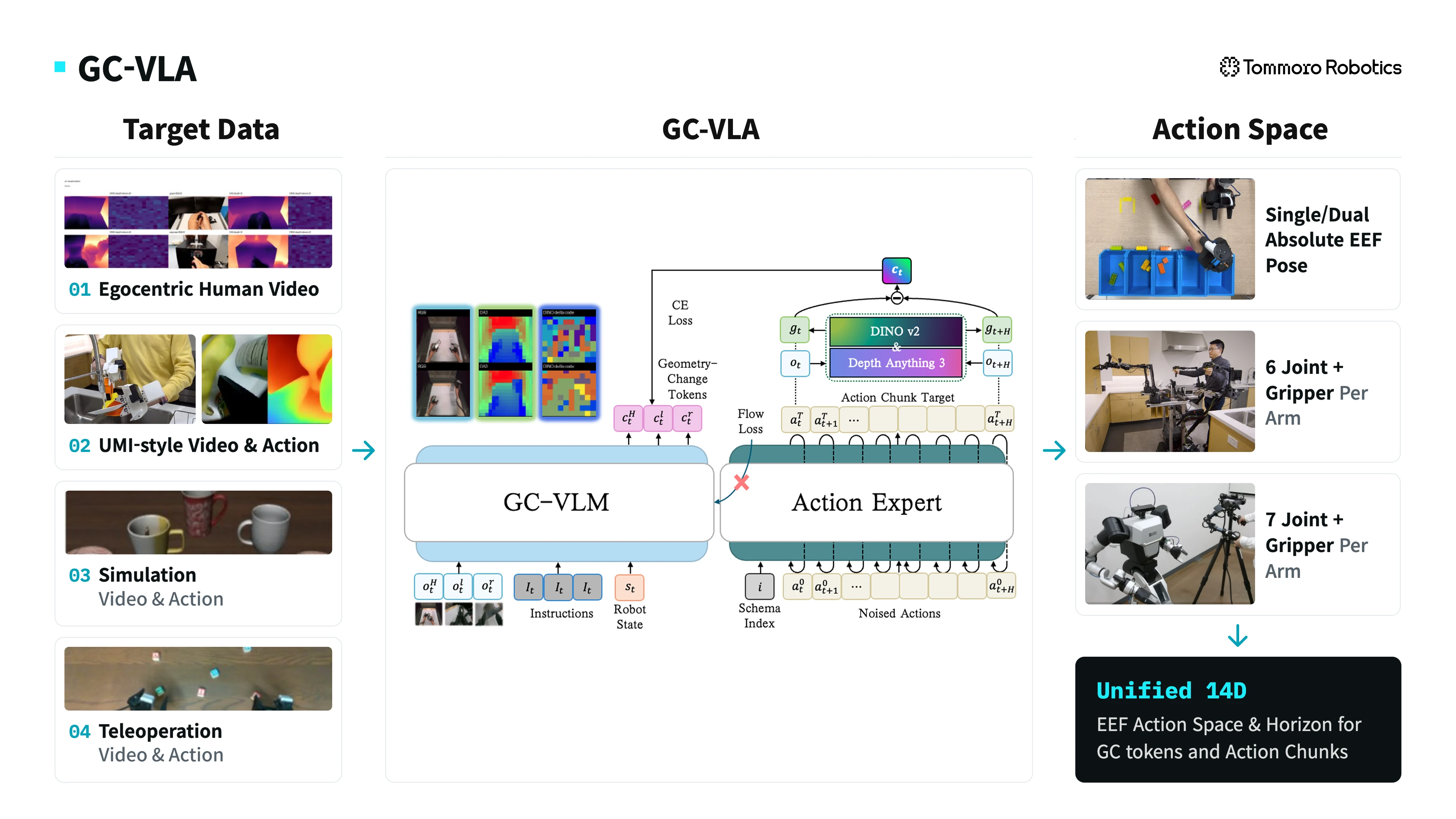
Learns representations of how a scene should change.
Translates scene-change representations into continuous robot actions.
Adds selective recovery during execution.
Keeps working. Reliably.
Tote picking that keeps going across repeated clears. Operational experience is collected and used to retrain the policy for more varied object poses.
What to watch
- Sustains continuous operation Keeps clearing totes, cycle after cycle.
- Repeats the full picking cycle Carries out picking and placement repeatedly as each tote is emptied.
- Handles random object poses Picks objects in random positions and orientations after they are poured into the tote.
- Learns from operational experience Improves through retraining on autonomous rollouts and human-intervention data.
Reliability loop
Learns from experience.
Start with task demonstrations, collect experience during operation, then retrain for more varied object poses.
01
Initial fine-tuning
Fine-tuned with just 3 hours of demonstrations
This initial task dataset covers a limited range of object poses. Rollout and intervention data have yet to be added.
02
Rollout and intervention
Learning from rollouts and human corrections
Autonomous rollouts and human corrections are recorded as training data. The expanded dataset is then used to retrain the policy.
03
Retraining results
Robust to random object poses
After retraining with rollout and intervention data, the robot handles varied object positions and orientations in this demonstration.
Stays precise across long horizons.
What to watch
- Executes long-horizon tasks as one continuous sequence.
- Maintains precision at each manipulation step.
- Coordinates both arms throughout the task.
- Recovers and continues when the task state changes.
01
Recovery during execution
Recovers from disruptions.
The policy responds to a changed task state, restores what is needed, and continues the current task.
02
Human-guided reinforcement learning
Reinforces the right behavior. Fast.
In the session shown, online reinforcement learning with human guidance corrects the behavior in under 28 minutes.
Compare the same task before and after correction.
Familiar starting positionHandles varied container positions across the brown tray, the intended starting area for this task. Before correctionStarting off the tray introduces a condition beyond the original task setup. The initial policy repeats an incorrect action. Human-guided RLAutonomous rollout episodes and human-taught trajectories are collected as training data. Reinforcement learning updates the actor policy in real time as this experience accumulates, refining how the robot selects its actions. After correctionThe robot learned the corrected behavior in under 28 minutes, demonstrating targeted correction of individual actions within a long-horizon task sequence.
Human-guided reinforcement learning, from initial attempts to corrected behavior.
Thinks. Plans. Reacts.
The robot breaks a goal into subtasks, detects meaningful changes, and updates its plan as the task changes.
What to watch
- Breaks goals into subtasks Turns the overall task into actionable steps.
- Reasons from the current scene Uses object and task state to decide what comes next.
- Connects planning to action Guides the robot through each subtask during execution.
- Responds to scene changes Adjusts its actions to fit the updated situation.
Context-aware behavior
Recognizes change.
Reacts immediately.
When object colors change, the model recognizes the updated scene and adjusts its actions to suit the current situation.